
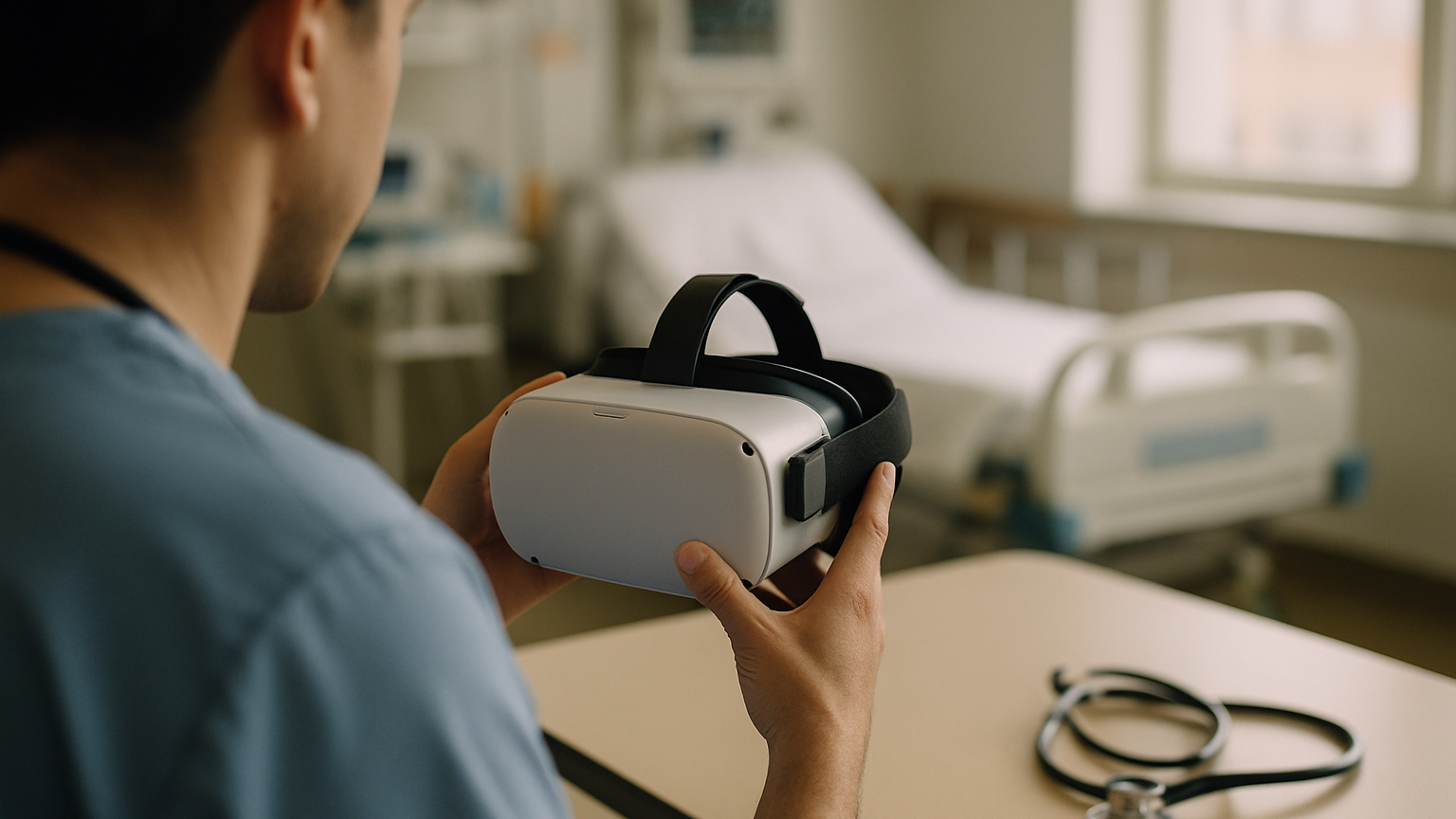
When a code blue is called, you are not just fighting time—you are wrestling with noise, crowding, and cognitive overload. Good teaching compresses all of that into something teams can handle under pressure, and that is where VR makes a tangible difference. VR code blue training creates a realistic, repeatable environment where teams can rehearse decisions, roles, and handovers at full speed without risking patient safety. Instead of a single, high‑stakes practice each semester, you can run multiple short, intense scenarios and iterate. Those seconds you usually lose to confusion, unclear leadership, or missing equipment become seconds you get back.
Education is not just memorizing algorithms. It is about applying them when the room is loud, the defibrillator cable is not where it should be, and a junior nurse has the right answer but is unsure about speaking up. In virtual reality, you can stress‑test not only the sequence of steps but also the human factors that make or break performance. The value is not in flashy visuals but in scenario design, clinical context analysis, and thoughtful debriefing. That combination turns practice into genuine readiness.
In this article, we explore why immersive simulation elevates code blue education, what it must teach beyond checklists, and how a human‑centered R&D process turns ideas into validated pilots. We will look at data‑driven assessment with AI support, practical implementation steps for hospitals and schools, and communication training that strengthens teamwork when every second matters. The throughline is simple: build with and for clinicians and learners, validate in context, and measure what improves outcomes in the room.
Why VR Elevates Code Blue Education For Faster, Safer Response
Traditional drills are valuable, but they are hard to scale and even harder to vary. With virtual reality code blue training, you can replicate the same high‑fidelity scenario dozens of times or tweak one variable—room size, alarm noise, visitor presence—to pressure the exact behaviors you want to see. Realism is not just about graphics; it is the controlled chaos of limited space, cross‑talk, and incomplete information. Because chaos wastes seconds. VR lets you expose learners to that chaos in a way that is safe, repeatable, and measurable.
Immersive scenarios are also efficient. You can reset a room in seconds, run back‑to‑back practice on leadership rotation, and collect consistent performance data each time. Teams can rehearse rapid role assignment, closed‑loop communication, and the first two minutes that often decide the trajectory of resuscitation. Instead of debriefing from memory, you can anchor learning in what actually happened: when compressions began, who called for the defibrillator, and how orders were confirmed.
Psychological safety matters, too. In practice, most teams forget to call time aloud or assign a compressor timer once the first shock lands. VR gives junior staff a safe way to try leadership, speak up, and make corrections without fear of harming anyone. Repetition builds automaticity, and automaticity protects scarce cognitive bandwidth for the unexpected.
There are practical benefits beyond learning quality. Headsets travel; storage is minimal; and you can train in spaces where a full manikin lab is not feasible. That said, VR augments rather than replaces task‑trainers: chest compression depth and airway skills still require hands‑on equipment. Use VR to strengthen decision‑making, team flow, and environment management, then layer skill stations where tactile precision is the goal.
What VR Code Blue Training Should Teach Beyond Algorithms
Checklists get you started; behaviors carry you through. High‑value scenarios teach fast role clarity, leadership visibility, and closed‑loop communication under noise. They rehearse the mundane but critical moves: connect oxygen, turn on suction, place pads correctly, charge early, clear the bed, and verbalize rhythms. And yes, people still forget the pads. The point is to train those micro‑decisions until the team executes them without pause.
Human factors should be baked in, not bolted on. Introduce competing sounds, false alarms, and a family member asking questions at the worst possible time. Practice pausing for a safety check before a shock, double‑checking medication and route, and announcing the plan so the room aligns. In well‑designed VR code blue education, learners feel the tension between speed and safety—and learn to resolve it in favor of both.
Device literacy and troubleshooting are trainable in VR, too. What happens when a battery warning appears, the cable is missing, or a setting is wrong on the monitor? Scenarios that surface these small failures teach anticipation: someone checks power, someone checks pads, someone checks time. Teams that expect friction lose fewer seconds to it.
Finally, vary the clinical context. Adult vs. pediatric, ward vs. radiology, day shift vs. night with a thinner team—each context bends workflow in subtle ways. Practice the handover when the code team arrives, the moment leadership changes, and the way orders shift as more resources enter the room. This is where VR code blue training shines: exploring edge cases without putting anyone at risk.
From Idea To Validated Pilot: Human‑Centered R&D For XR Training
Turning a concept into a training tool that clinicians actually use requires more than good intentions. It takes a research‑driven process that starts with real user needs and ends with a pilot tested in authentic environments. Our work brings together technology development, experience design, scenario creation, and partnerships with academic and medical institutions. That human‑centered approach, supported by collaborations and grant‑friendly R&D, is how ideas become validated solutions in our immersive innovation lab.
Discovery With Clinicians And Educators
Start with people: clinicians, educators, students, and code team members who will live with the solution. We interview, observe, and map current workflows to locate friction—missed cues, unclear roles, equipment delays, or debrief gaps. Together we define the learning outcomes that matter most, such as faster role assignment, earlier first shock, or cleaner closed‑loop communication. Only then do we decide which XR and AI capabilities are relevant, and which would only distract.
Clinical content is co‑designed and versioned like software. We outline decision points, craft branching paths for likely errors, and pre‑plan measurable indicators that align with the outcomes. Educational goals, usability constraints, and safety considerations shape every scenario. The result is a blueprint for immersive training that can be tested rapidly and improved systematically.
Prototype, Test And Iterate Scenarios
Prototyping starts simple—paper scripts, click‑through flows, and early interactive builds that are quick to change. We test with small groups to spot friction: confusing prompts, unrealistic timing, or missing cues. Data from these runs and structured debriefs drive iteration until the scenario flows like the real world while still being teachable. Short cycles keep costs in check and momentum high.
Once scenarios hold up in testing, we prepare a pilot: align with IT and clinical leads, define inclusion criteria, finalize assessment plans, and set success metrics that stakeholders accept. Our R&D process is designed to support grant‑funded projects and collaboration with university and healthcare innovation programs, making early adoption more feasible. The outcome is not just a demo, but a validated learning experience that fits actual constraints.
Assessment And Debrief: Data‑Driven Learning With AI Support
Measurement sharpens reflection. In VR you can capture objective markers like time to first compressions, time to first shock, order of actions, and whether key safety steps were verbalized. You can also tag moments that deserve discussion: hesitation before charging, overlapping commands, or missed confirmation. Anchoring the debrief in these signals makes it specific and fair.
AI can support educators without replacing them. Automated timelines, speech‑to‑text transcripts, and detection of closed‑loop confirmations help facilitators find the right clips fast. Summaries can highlight patterns—who spoke when, how often orders were acknowledged, where delays clustered—so the conversation moves from opinion to evidence. In VR code blue training, that means more time coaching and less time reconstructing what happened.
Still, metrics are not mastery. A team can hit target times and yet feel off—maybe leadership rotated too late, or the room never aligned on the plan. Debriefs should balance data with the subjective experience of learners and facilitators, capturing context that numbers alone miss. The goal is a shared understanding of what worked, what did not, and what to try differently next run.
Over cohorts, aggregated insights become curriculum intelligence. If multiple groups delay pad placement, build a micro‑drill on that step; if closed‑loop language is weak, script prompts that nudge it earlier. This continuous improvement loop is where immersive, AI‑supported education starts compounding its value.
Implementing VR In Hospitals And Schools: Practical Steps
Implementation succeeds when it is scoped, staged, and supported. Start by defining one or two scenarios tied to concrete outcomes and commit to a limited pilot with clear evaluation criteria. Line up a faculty lead, an IT contact, and a unit champion to keep feedback flowing. Treat the pilot like any clinical change: communicate, train, measure, and iterate on a schedule everyone can see.
- Choose headsets and hygiene workflows appropriate for your setting
- Schedule short, frequent sessions rather than rare, long events
- Prepare a debrief checklist aligned to measurable outcomes
- Integrate with existing BLS/ACLS curriculum and skill stations
- Address data governance, privacy, and device management upfront
- Plan facilitator onboarding and a simple support pathway
VR is not a silver bullet, and it is not for everyone. Skip it if your environment prohibits head‑mounted displays, if you only run minimal annual refreshers with tiny teams, or if the primary need is tactile skill acquisition (airway instrumentation still needs hands‑on equipment). For blended curricula, VR pairs well with skill stations and manikins—think: scenario for team flow, stations for compressions and airway. The mix keeps learning both realistic and practical.
For educational programs, interprofessional sessions are a powerful use case: nursing, medicine, respiratory therapy, and pharmacy students practicing together before they ever meet on a ward. Inclusive design matters here, especially for neurodiverse learners who benefit from adjustable stimuli and structured guidance. Our broader work in healthcare education, including the Focus VR platform and the Harmony VR experience, illustrates how thoughtful XR design can adapt environments and support attention, communication, and confidence—principles that transfer directly to emergency training.
Stronger Teamwork Under Pressure: Clinical Communication Simulations
High‑stakes performance is mostly communication with a clinical purpose. Scenarios should demand crisp SBAR calls, explicit role assignment, and unambiguous orders with name, task, and time. Teams practice asking for repeat‑backs, announcing shocks, and summarizing the plan every cycle so the room stays aligned. This is where “soft skills” become clinical skills: they directly influence time to action and error prevention.
Good simulations engineer friction: a conflicting opinion from a senior, a noisy bystander, an unexpected rhythm change that challenges the plan. Learners must de‑escalate, clarify, and recommit the team to the next safe step. In practice, after the second run most groups start saying names first, then orders—volume goes down, clarity goes up. That shift is small on paper and huge in a real room.
Rotate leadership so everyone experiences the cognitive load of directing a resuscitation and the responsibility of following well. Debriefs then trace how language affected timing, how timing affected safety, and where the team can buy back seconds without cutting corners. Build those habits in VR code blue training, and the benefits carry forward to every urgent call you answer next.