
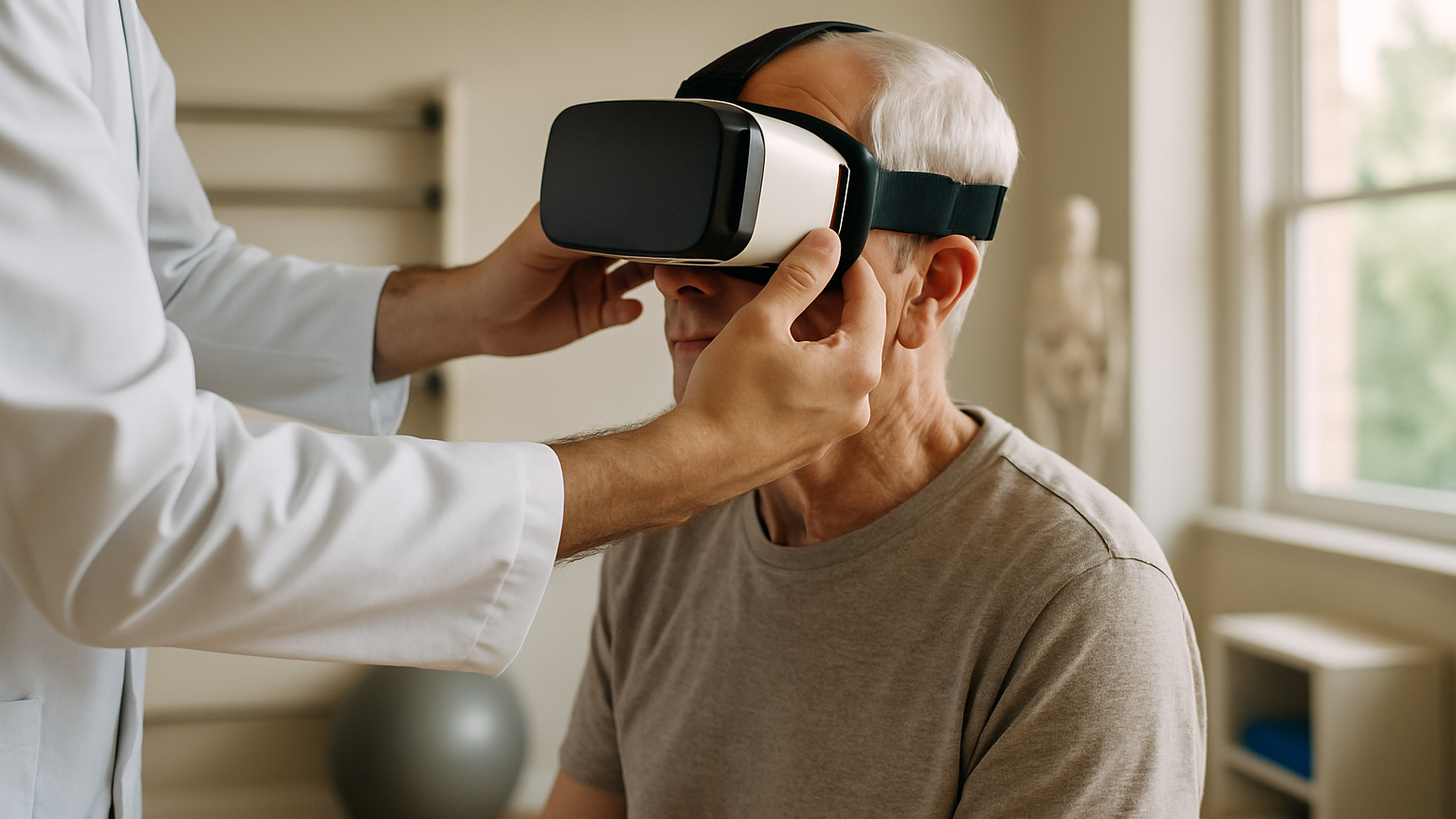
VR therapy reimbursement can feel like three conversations happening at once: a clinical discussion about outcomes, a billing conversation about codes, and a procurement talk about hardware and software. If you’re a clinician or program lead, you don’t need a billing seminar — you need a clear path to “yes.” In this guide, we map the practical routes clinics use to secure coverage, the documentation that actually moves claims forward, and the kind of evidence payers ask for. Along the way, we’ll show where structured, therapist-guided VR — the kind we build in our MedTech XR & AI solutions — typically fits within existing benefit categories.
One quick note before we dive in: policies evolve, codes vary by state and payer, and every medical director has their own thresholds. Treat this as a practical roadmap, not legal or billing advice. The goal is education — enough context to make strong internal decisions, and enough structure to have productive conversations with payers and administrators.
We’ll unpack why VR touches multiple coverage lanes, how to frame the service versus device question, which documentation raises approval odds, and what evidence tends to resonate. You’ll also see where Focus VR and Harmony VR sit in common coverage models and what to do when coverage is partial or delayed. By the end, you’ll know the building blocks — and the trade-offs — behind reimbursement for VR therapy.
VR therapy reimbursement: why it works differently
Virtual reality in healthcare is a hybrid: hardware, software and a therapist-guided protocol. That mix doesn’t slot neatly into a single benefit category. Sometimes the payer sees a clinician-delivered service where VR is the clinical method. Other times they see a device or a digital program that augments care. Those perspectives drive different documentation asks and different utilization management rules — which is exactly why VR therapy reimbursement can look uneven across payers.
Coverage also varies because VR spans settings. A therapist may run sessions in a clinic, a school, or a rehabilitation unit; a subset of programs extend into the home with remote guidance. Each setting raises questions about place of service, supervision, and whether remote therapeutic management applies. If your program plan anticipates multiple settings, bake those coverage implications into your documentation from day one.
In practice, most teams begin by treating VR as a modality within an existing covered service — occupational therapy, physical rehabilitation, behavioral health or developmental therapy — while they evaluate whether separate device or digital components need distinct handling. It’s a pragmatic first step that aligns with clinician scope and reduces friction with medical necessity criteria. Over time, programs layer in more sophisticated models as evidence and payer comfort grow.
Is VR billed as a service, a device, or a digital therapeutic?
Three models show up most often. The first — and typically fastest to implement — is service-based billing: the clinician delivers a covered therapy session and uses VR as the method of care. Documentation ties the intervention to therapy goals, outcomes and time. The second is a device or supply pathway, where hardware and accessories are captured separately under payer rules for supplies or equipment. The third is a digital therapeutic path, where software access and remote engagement are billed under digital/remote care codes when policy allows.
Each path has trade‑offs. Service-only billing is simpler operationally and usually fits established supervision and time rules, but it may not reflect all program costs. Device pathways promise clearer capitalization of hardware, yet they depend on payer‑specific policies and often require prior authorization. Digital therapeutic approaches align with software value and remote engagement, but payers will expect strong evidence, precise eligibility criteria and tight data capture.
A practical way to choose is to ask: where is the clinical value created and documented? If the therapist’s skilled time drives the outcome, service-based billing is usually the anchor. If your model pushes structured home practice with measurable remote adherence and outcomes, layering in digital or remote management codes may make sense — assuming policy alignment. If your institution capitalizes equipment, a device line item can be appropriate for procurement even when the claim remains service-led.
One more reality check. Payers do not reimburse for consumer entertainment content or open‑ended “wellness” sessions without clinical goals. If your plan centers on unstructured experiences, coverage will be a hard no. Let’s be blunt: if you need guaranteed fee‑for‑service next month, VR won’t give you that.
Codes and documentation that help claims get approved
Think in building blocks: the service or device code, the diagnosis and medical necessity story, and the place/time/modifier details that connect your session to policy. Different payers emphasize different pieces, but strong charting across all three raises approval odds and simplifies audits. Here’s how teams commonly structure it.
Service and device codes (CPT, HCPCS, local codes)
When VR is the method inside a covered therapy session, clinics typically select CPT codes that match the clinician’s scope and the therapeutic activity performed — for example, occupational therapy, physical rehabilitation, psychotherapy or developmental therapy codes, depending on the intervention. If hardware, disposables or accessories require separate handling, some programs add HCPCS Level II supply or device codes in alignment with payer policy. In regions with payer‑specific guidance, local codes or instructions may apply. The critical point: code the service you actually provided; document VR as the clinically appropriate modality used to achieve the goals.
Diagnosis and medical necessity (ICD-10, documentation)
Link the ICD‑10 diagnosis to a plan of care with measurable goals that VR enables you to meet more effectively or efficiently. Chart baseline function, targeted skills, the rationale for using a controlled, repeatable and engaging VR environment, and the patient’s response. Include session‑level outcomes and progress toward goals; if your program uses standardized assessments, reference them. Prior authorizations and medical director reviews go faster when your notes make clinical logic obvious.
Place of service, time, and modifiers
Be precise about where care occurred (clinic, school, outpatient department, home) and how long the skilled portion lasted if you bill time‑based codes. If elements of the program are delivered remotely, check telehealth and remote therapeutic management policies for allowable place‑of‑service entries and modifiers. Some payers require specific modifiers for synchronous versus asynchronous components; others restrict remote services by discipline. Align your entries with the published policy language — small mismatches often trigger denials even when the clinical story is strong.
What evidence payers expect for VR interventions
Payers want to see that VR isn’t a novelty — it’s a clinically effective way to reach goals tied to a covered condition. That usually means peer‑reviewed studies showing efficacy for the target population, plus pragmatic data from real‑world use. For pediatric and neurodevelopmental contexts, clarity on measured skills (attention, executive function, social communication) and how they transfer to daily function is essential. Align your outcomes with measures the payer recognizes.
Operational evidence matters, too. Safety protocols, sensory considerations, therapist guidance, and the ability to adjust stimulation levels demonstrate clinical maturity. If your program leverages structured, repeatable sessions, say so — repeatability and control are strengths of immersive therapy. In practice, most clinics notice payer conversations improve when they present both clinical outcomes and a clear delivery model.
If your institution is early in adoption, pilots with defined endpoints can generate credible evidence quickly. Short, targeted pilots — 8–12 weeks with pre‑ and post‑measures — often provide enough signal to inform coverage discussions, especially when paired with clinician testimonials and adherence data. This is where research partnerships help: well‑designed pilots reduce ambiguity and build internal confidence.
Where Focus VR and Harmony VR fit into coverage models
Focus VR is designed for structured cognitive training related to ADHD and autism, making it a natural fit inside clinician‑delivered sessions where attention, executive function and task sequencing are targeted. In many programs, the therapist bills the appropriate therapy service while documenting that the session used the Focus VR method to deliver controlled, repeatable and engaging practice. For organizations exploring home reinforcement, a hybrid approach that pairs in‑clinic therapy with remote progress tracking may be considered where policy allows. Learn more about the design and scope of the Focus VR platform.
Harmony VR supports therapist‑guided social, emotional, sensory and communication practice for children on the autism spectrum. Its predictable, sensory‑aware environments and adjustable task complexity align well with developmental goals documented in behavioral health, occupational therapy or special education contexts. Most teams treat Harmony VR as the modality inside a covered session; documentation highlights gradual difficulty, specialist guidance and session‑level outcomes. Explore the capabilities of the Harmony VR platform.
Where institutions require broader program framing — for example, a multi‑site roll‑out or a grant‑funded initiative — positioning Focus VR and Harmony VR within a human‑centered, research‑driven process tends to resonate. That means clear target populations, session plans, clinician training, outcome measures and data governance. VR therapy reimbursement discussions go smoother when the technology is presented as part of a validated care pathway, not a standalone gadget.
When coverage falls short: grants, pilots and other funding paths
Even with strong documentation, coverage can be partial, delayed or payer‑specific. That’s not a dead end — it’s a signal to diversify funding in the near term while you build the evidence base. Hospitals and clinics often combine clinical reimbursement for therapist time with non‑clinical sources that underwrite hardware, program development and evaluation. Short pilots with clear outcomes can unlock internal innovation budgets or payer‑sponsored evaluations.
Common bridges include innovation grants, academic partnerships, community health funds, and philanthropy earmarked for pediatric or neurodevelopmental programs. If your organization runs a research arm, an IRB‑approved study can fund early deployment while producing publishable findings. Our team’s human‑centered R&D approach — from interactive prototypes to pilot‑ready solutions — is built for this phase and supports grant‑funded projects and collaborations with universities and healthcare programs. You can explore how we structure pilots in our research and development studio.
- Innovation or transformation funds within your health system
- University or hospital research grants tied to pediatric and neurodevelopmental outcomes
- Philanthropic gifts and foundation support for autism and ADHD initiatives
- Payer‑sponsored pilots with predefined endpoints and evaluation criteria
If you’re still in the “prove it” stage, keep expectations clear internally. Start with a focused population, define outcomes upfront, and document the workflow impact as carefully as the clinical gains. Over a few cycles, you’ll have the ingredients payers want: measurable improvement, repeatable delivery, and a cost‑aware model. That’s the path from early adoption to sustainable VR therapy reimbursement.