
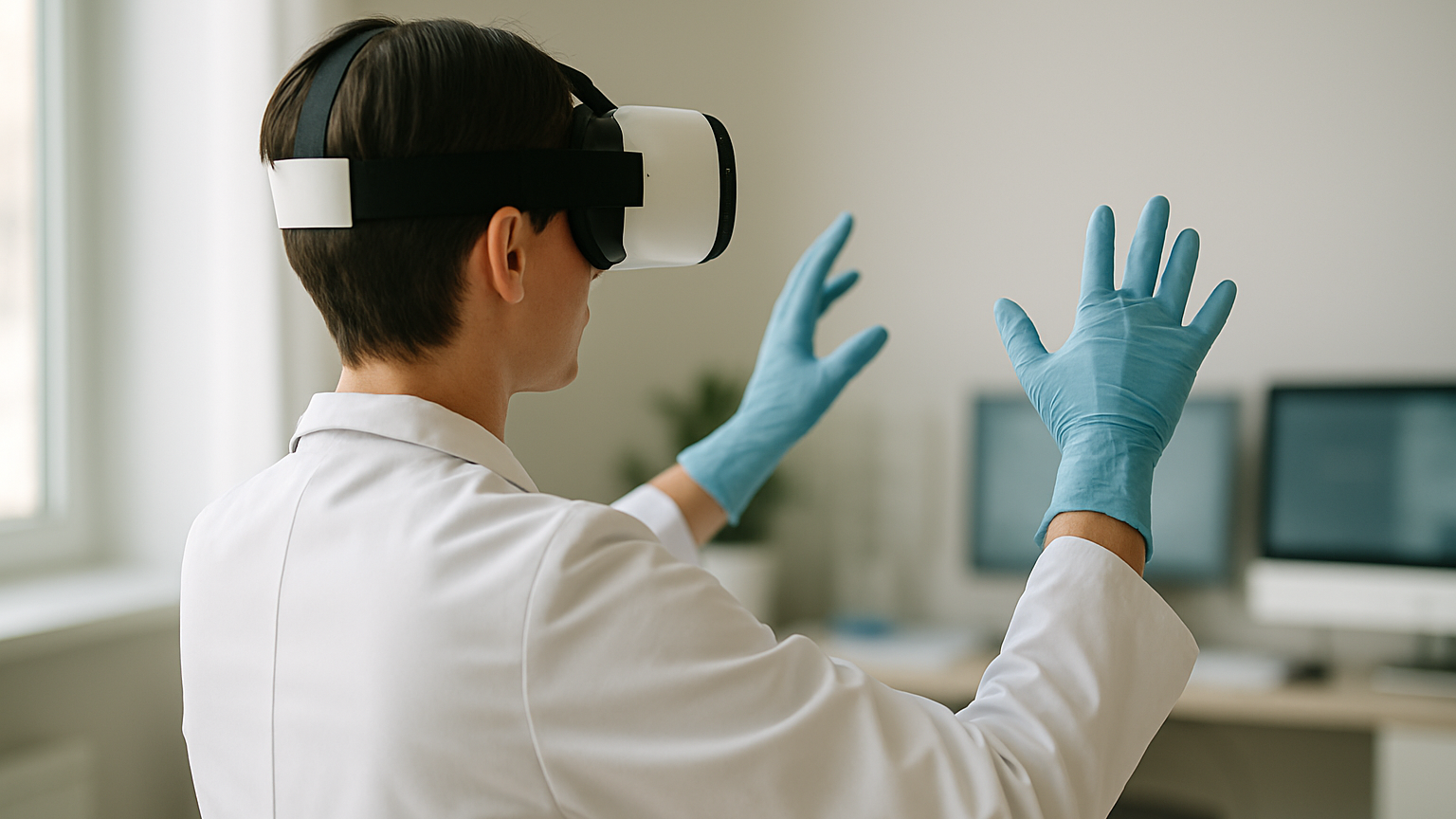
If you’re watching healthcare XR trends 2025, you’re not just chasing shiny headsets — you’re looking for real impact on care, training and patient experience. Staffing shortages, rising acuity and tighter margins press every decision to prove value faster. XR can help standardize complex training, create controlled therapy environments and extend reach beyond the clinic. The question isn’t “is the tech ready?” but “is the workflow ready for the tech?”. That’s where the winners and the stalled pilots part ways. Sounds fancy, but here’s the short version: measurable outcomes and smooth implementation or it won’t stick.
At RTE Lab, we design, prototype and validate immersive, AI-supported tools with a human-centered lens. We build for real contexts — therapy, rehabilitation, medical and soft-skills training — not for demo booths. The result: experiences that are understandable, usable and relevant in practice. Explore RTE Lab’s MedTech solutions to see how we connect scenario design, UX and data capture into one coherent path from idea to pilot. No fluff, just what moves outcomes. And yes, we work with academic and healthcare innovation partners when a grant-funded route makes sense.
What healthcare XR trends 2025 Signal For Providers
For providers, the signal is clear: XR is moving from novelty to practical toolkits built around specific use cases. Devices are lighter, hand tracking is better, and enterprise management is catching up — which lowers the friction to try, learn and deploy. Content is shifting from one-off demos to structured training, therapy scenarios and repeatable assessments. Data capture is becoming a baseline expectation, not a bonus. And integration conversations now include telehealth and clinical documentation, not just “how do we plug in the headset?”.
What changes in daily work? Expect standardized simulations for onboarding, with clear objectives and debriefs. In therapy and rehab, think repeatable sessions that can be tuned to patient progress and tracked over time. Patient education gets interactive: pre-op walk-throughs or anxiety-reducing modules can happen in a controlled, safe environment. On the policy side, privacy and safety frameworks are maturing, and conversations about reimbursement-linked outcomes will keep growing — but they’ll demand evidence. That push pulls the industry toward pilots designed from day one with measurable endpoints.
Operationally, teams that succeed build cross-functional groups early: clinicians, therapists, IT, infection control, legal/privacy and education leads. They set device hygiene and room setup standards, define who runs sessions, and decide how to store data. They also plan for content updates and change management, not just device procurement. The payoff is smoother adoption and fewer surprises. The miss? Treating XR like plug-and-play and discovering later that the biggest barrier wasn’t hardware — it was workflow.
AI + XR In Care: Training, Therapy Support And Patient Engagement
In training, AI can adapt XR scenarios to learner performance: faster branching when someone excels, more scaffolding when they struggle. That means clinical decision points, procedural steps and soft-skills encounters can be tuned in real time. Add structured debriefing and competency tracking, and you’ve got a repeatable learning loop instead of a one-off wow moment. This is where XR training simulations and clinical communication simulations move from interesting to indispensable. The result is consistent exposure to critical moments before they happen in real care.
For therapy support, immersive environments create safe, controlled and engaging spaces for graded practice. Attention and cognitive exercises can scale in difficulty, sensory stimuli can be modulated, and tasks can be repeated without boredom derailing the plan. AI helps personalize intensity and pacing, while session data keeps providers and families aligned. Importantly, these tools can complement — not replace — clinician judgment and in-person care. The sweet spot is targeted practice that fits the therapy plan and shows progress you can actually review.
On the patient engagement side, think interactive education that reduces uncertainty and boosts adherence. When patients understand the why and the how — and get to practice parts of it safely — they show up more prepared. Caregivers can join, too, so the home environment supports the plan instead of fighting it. In practice, most teams notice session quality improves simply because everyone shares the same mental model of what “good” looks like. That’s a quiet but powerful win.
From Hype To Practice: Measuring Clinical Value In XR
Value is the bridge from pilot to standard of care. So the plan needs measurement baked in — specific outcomes, practical implementation metrics and a credible evidence pathway. Start with the clinical problem and define signals of improvement that matter to your team and patients. Then choose the right tools in XR and AI to make those signals observable and trackable. Simple idea, disciplined execution.
Clinical Outcomes You Can Track: Adherence, Range Of Motion, Cognition
Start with adherence: completed sessions, time-on-task and consistency across weeks. For musculoskeletal rehab, range of motion and movement quality during guided tasks are natural fits. In cognitive and attention training, track accuracy, reaction times and progression through difficulty levels. For anxiety or sensory modulation, monitor exposure tolerance and self-reported readiness before and after sessions. These are concrete, repeatable signals — not anecdotes.
Implementation Metrics: Session Time, Usability, Clinician Workload
If a tool creates bottlenecks, it won’t survive. Track average session setup time, total session duration and completion rates. Add usability scores and perceived workload so you know if the experience feels smooth or taxing. Observe how many staff touches a session requires and whether tasks shift to the top of license. These operational numbers tell you if the program scales or stalls.
Evidence Pathways: Pilots, IRB Approvals And Grant-Funded Studies
A credible path often starts with a tightly scoped pilot to test feasibility and signals of effect. From there, IRB-approved studies can formalize protocols, endpoints and ethics — essential if you’re publishing or seeking reimbursement alignment. Multi-site collaborations strengthen generalizability, while grant-funded projects can de-risk early development. At RTE Lab, our R&D process supports grant-funded initiatives and cooperation with university and healthcare innovation programs. The goal is to move from promising signal to validated outcome without losing sight of the people behind the data.
Inside RTE Lab: Turning Trends Into Validated Pilots
We begin with the problem and the people — patients, therapists, clinicians, caregivers and educators. Then we choose the right mix of XR and AI to create controlled, repeatable and engaging experiences that target the outcome you care about. Our process links scenario design, UX research, technical prototyping and context-of-use analysis. The aim is not to build technology for its own sake, but to craft tools that can be tested, improved and implemented in real environments. That’s how pilots become programs.
Practically, that means discovery workshops, rapid interactive prototypes and clear validation criteria. We map stakeholders, define constraints, and agree on success metrics before the first headset powers on. Then we iterate with clinicians and users, tuning flows and data capture along the way. If you need a structured partner from idea to pilot, explore our research and development services. It keeps the team aligned on outcomes, not gadgets.
We also plan for integration points: device management, privacy, space setup and training for staff champions. Deliverables typically include a working prototype, a pilot protocol, and a lightweight analytics plan that fits your workflows. After the first two weeks, one issue usually pops up: headset logistics — charging, cleaning, booking — so we tackle that early. Collaboration with academic or hospital innovation programs can accelerate approvals and funding at this stage. The result is a pilot that respects clinical reality from day one.
Use Cases To Watch: ADHD (Focus VR), Autism (Harmony VR), Rehabilitation
ADHD demands structured, engaging practice — not just good intentions. Our Focus VR platform is built around cognitive training designed to strengthen attention control and working memory through paced, repeatable tasks. Difficulty adapts as users progress, and session data makes it easy for clinicians and families to see trends. The immersive format keeps motivation high while reducing distractions. It complements existing therapy plans rather than trying to replace them.
In autism support, predictable structure and gentle exposure make a real difference. Our Harmony VR solution creates immersive scenarios for practicing routines, social scripts and sensory modulation in a safe, controlled environment. Therapists can guide sessions, adjust intensity and review performance over time. Caregivers get a common language to support progress at home. It’s about repeatable practice that respects individual needs and builds confidence step by step.
For rehabilitation, XR supports guided movement with immediate feedback and clear goals. Patients can work on range of motion, balance and task-specific practice in environments that make repetition feel purposeful. Clinicians get adherence data and performance traces instead of relying only on memory or notes. The controlled nature of XR sessions reduces variability and helps standardize progression. When that data feeds back into the plan of care, gains stop being guesswork.
How To Start In 2025: Roadmaps, Pilots And Stakeholder Buy-In
Begin with a tight scope: one patient group, one training module or one therapy objective. Write down the outcomes you want, how you’ll measure them and what “good enough to scale” looks like. Align on workflows: where sessions happen, who runs them, and how data is captured and reviewed. Build a short roadmap that includes discovery, prototyping, pilot delivery and review. Keep approvals and procurement in parallel so momentum doesn’t stall.
Get the right people in the room early: clinicians or therapists as champions, IT and privacy for guardrails, education leads for competency, and operations for space and scheduling. If research is involved, bring IRB into the conversation before you lock protocols. Plan training for staff and backup coverage so sessions don’t slip when schedules crunch. Decide how you’ll communicate progress to leadership and front-line teams. Small, steady wins will earn more runway than one big reveal.
Funding can come from innovation budgets, philanthropy or grants — and our R&D process is built to support grant-funded routes when that’s the right path. If you’re aligning to healthcare XR trends 2025, focus on credible outcomes and operational fit rather than chasing features. This is not for teams who need a turnkey solution with guaranteed reimbursement next quarter or who can’t spare a clinical champion for the pilot period. It works best when you’re ready to test, learn and iterate in real workflows. That’s how pilots turn into sustainable programs.