
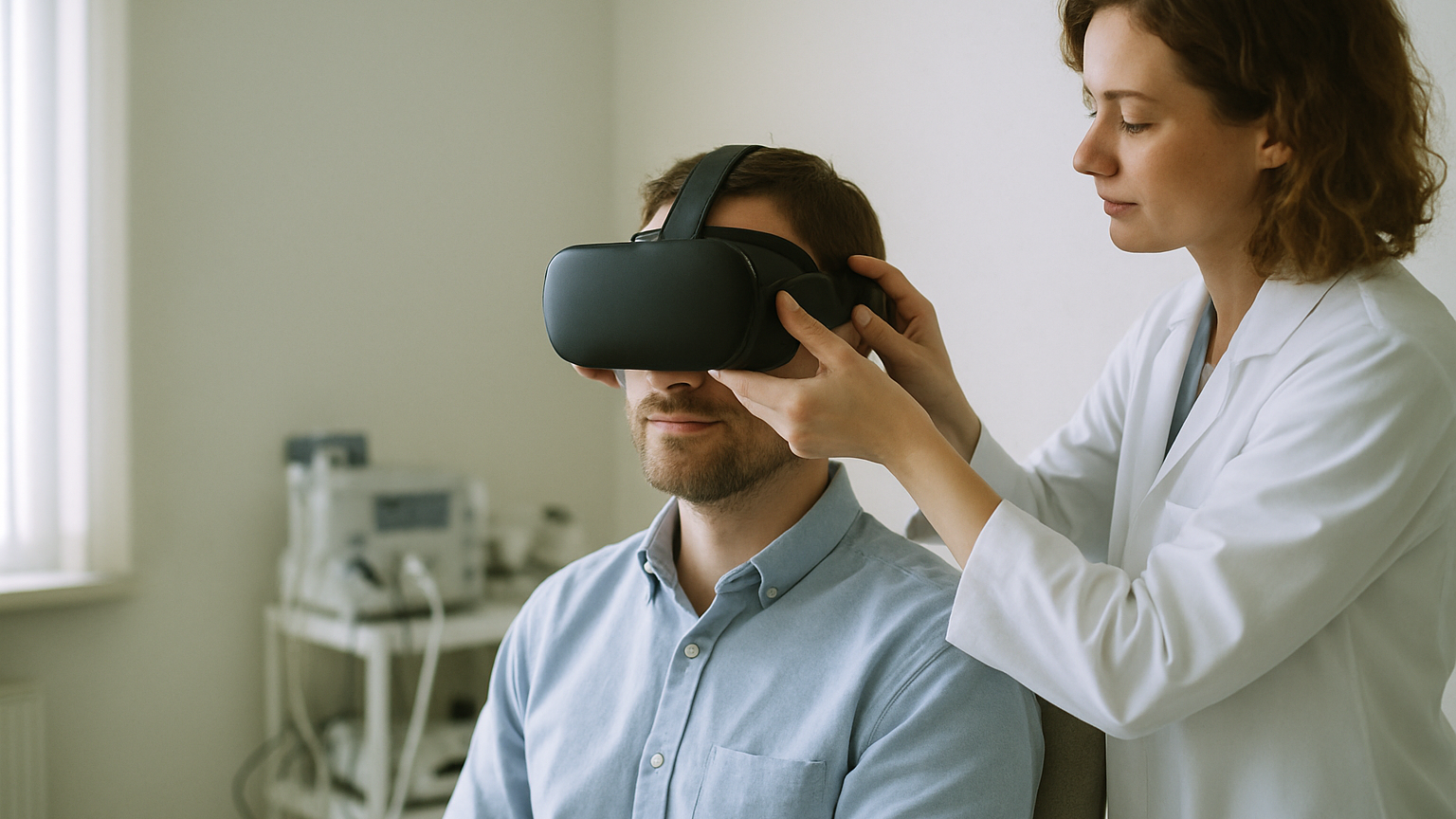
You already balance medication, procedure timing, and patient coaching. So where does immersive tech fit? VR for pain management is best seen as a clinical tool, not a gadget — one that leverages attention, emotion, and expectation to reduce distress and perceived intensity. In the right moments it calms the room, helps patients stay engaged, and can make difficult procedures more tolerable. This guide walks through mechanisms, evidence, and the practicalities of rollout so you can decide when it’s worth using — and when it isn’t. The goal is simple: translate research into steps your team can test in real clinical workflows.
We’ll keep it grounded: which indications respond, how to screen, what to measure, and how to run a lean pilot without derailing a clinic day. Expect specifics, not hype. If you want the tl;dr — treat VR like an adjunct that reduces peak distress during predictable pain episodes and builds coping skills between them. When it works, staff notice the room gets quieter and patients keep breathing with you. When it doesn’t, you should be able to set it aside in seconds and proceed as usual.
How VR Modulates Pain: Attention, Emotion, And Expectation
Pain competes for limited attentional bandwidth. Immersive scenes that are rich, interactive, and responsive soak up that bandwidth, leaving less capacity for nociceptive input to reach conscious focus. Think of a burn dressing change where the patient tracks targets or explores a cooling landscape; the task becomes the foreground, while pain shifts to the background. High presence — the sense of “being there” — amplifies this effect by cutting off external cues that would otherwise keep pain salient. The practical takeaway: choose content that demands gentle but continuous engagement, not passive watching.
Emotion shapes pain. Anxiety, hypervigilance, and catastrophizing all intensify perception, while calm and agency blunt it. VR can guide slow breathing, synchronize visuals with respiration, and offer micro-goals that reward steady pace — a feedback loop that lowers arousal. Scenes that cue cooling, safety, and progress tend to outperform generic videos because they tap into affective pathways that color pain signals before they’re appraised. In short: the right scenario is equal parts coping skills and soothing context.
Expectation is the brain’s prediction engine. Clear pre-briefs, credible framing, and early wins (a quick drop in distress within the first minute) set a positive prior that sustains analgesia. Some programs layer in embodiment illusions — visualizing a limb moving fluidly or cooling — to recalibrate body maps implicated in chronic pain. Even simple scripts help: explain what the patient will feel, how to breathe, and when control is theirs. The clinical point isn’t placebo; it’s predictable neuromodulation that starts before the headset goes on.
What The Evidence Shows: Indications, Outcomes, And Limits
Across studies, the strongest signals appear in acute, procedure-related pain and anxiety, with consistent reductions in self-reported intensity and distress. In chronic conditions, benefits skew toward functional gains, fear reduction, and better adherence, rather than dramatic pain elimination. Outcomes you’ll see measured most often: numeric pain ratings, anxiety scores, cooperation during procedures, and opioid use during or shortly after the event. Limitations are real — small samples, heterogeneous content, and variable protocols — so expect effect sizes that depend on timing, coaching, and scenario fit. Translation: it works best when the clinical moment is predictable and staff are trained to cue skills, not just press play.
Acute Procedures: Burn Care, Wound Dressing, Labor
Burn dressing changes and wound care are the classic use cases: immersive cooling or task-based worlds reliably lower reported pain and distress compared with standard distraction. You’ll also see VR used during venipuncture, PICC placement, dental procedures, and post-op mobilization to improve cooperation. In labor, VR functions as a coached breathing and focus aid between pharmacologic options, not a replacement for them. Procedural teams often report smoother pacing and fewer start–stop cycles when patients stay engaged with the scene. The caveat: in chaotic emergencies or when rapid, continuous verbal interaction is essential, VR can get in the way.
Chronic Pain: Musculoskeletal And Neuropathic Conditions
For back and neck pain, osteoarthritis, and postsurgical syndromes, programs often combine graded exposure, movement rehearsal, and relaxation. The wins tend to be reduced kinesiophobia, better movement quality, and small-to-moderate drops in average pain when sessions are repeated consistently. Neuropathic pain is more variable; some patients benefit from body-schema recalibration or cooling imagery, others respond mainly to stress reduction and sleep support. Expect durability to depend on practice — think weeks of brief sessions, not a one-off. Fit matters: align content with functional goals the patient cares about.
Pediatrics And Rehabilitation Settings
Children often respond quickly because engagement is natural and the novelty is high. In rehab, gamified tasks increase repetitions and make range-of-motion work tolerable long enough to matter. Parents and therapists can cue breathing and positive self-talk while the child stays immersed — a division of attention that softens pain chatter. Pay close attention to hygiene, sizing, and bite-sized sessions to avoid fatigue. For adolescents with high anxiety, a clear pre-brief and a visible pause option maintain trust.
Implementing VR For Pain Management In Clinical Workflows
Start with the moment, not the device. Map one or two predictable pain points in your pathway — first burn dressing change, first post-op mobilization, or debridement — and define a simple yes/no screen (orientation, vision, vestibular history, seizure history). Build a brief script: what the patient will see, how to breathe, when they can pause, and how you’ll communicate with them during the session. Decide success criteria up front: a two-point drop in distress, smoother procedure pacing, or fewer interruptions. If it doesn’t help, remove it quickly and continue — that alone keeps staff adoption high.
Operationally, set up a content library matched to use cases (cooling and task-based scenes for acute care, relaxation and graded movement for chronic). Create a cleaning and charging routine, plus labeled bins for face covers and wipes. Assign a champion per shift who can adjust fit, interpupillary distance, and volume in under a minute. Document baseline and post-session pain/anxiety, any adverse effects, and whether the procedure finished as planned. Keep the headset either seated or supine where possible; standing is optional, not required.
Training is short but specific: 15–30 minutes to practice the pre-brief, headset fit, and a fallback plan. A dry run with a colleague to feel the pacing pays off more than a long slide deck. If you’re surveying the landscape of devices and clinical content, you’ll find examples aligned to therapy, rehabilitation, and communication skills within our XR & AI MedTech Solutions. The north star isn’t graphics — it’s whether the scenario supports the behavior you need at that clinical moment. Implementing VR for pain management works best when the experience is designed for controlled, repeatable, and engaging use in real rooms, not lab demos.
Plan for cost-of-ownership early: face covers, disinfectants compatible with the hardware, and time to update content. Choose whether you’ll centralize headsets (checked out as needed) or station them where the pain moments occur. A light-weight checklist posted at the point of care prevents drift: screen, brief, fit, run, re-brief, document. Pair that with a monthly review of a few charts to see if it’s changing the right outcomes. Small, consistent habits beat large, sporadic pushes.
Safety, Contraindications, And Ethical Considerations
Most adverse effects are mild and transient: motion sickness, eye strain, or brief disorientation. Minimize risk by starting with seated use, keeping sessions short at first (5–10 minutes), and avoiding fast camera motion in content. If nausea or dizziness appears, stop immediately and remove the headset; forcing through it erodes trust and future adherence. Keep verbal contact — a hand on the shoulder and periodic check-ins anchor the patient in the clinical room. And always have a plan B ready.
Absolute or strong cautions include a history of photosensitive seizures, uncontrolled epilepsy, severe vestibular disorders, acute migraine with aura, delirium, active psychosis, or severe motion sickness. For recent eye surgery or significant visual impairment, confirm with the treating clinician before use. Claustrophobia or panic can surface; a visible pause option and quick removal protocol are non-negotiable. Pregnancy is not itself a contraindication, but respect comfort, positioning, and hydration. For pediatrics, use appropriately sized headsets and avoid content with rapid visual flow.
Hygiene is clinical: disinfect lenses and facial interfaces between users, use single-patient covers when needed, and follow the hardware manufacturer’s compatibility list for wipes. Obtain informed consent that covers what data (if any) the device collects and where it’s stored; if analytics are enabled, route them securely. Ethically, frame VR as an option, not an obligation, and be honest about likely benefits. Expectation management protects both patient autonomy and your program’s credibility. A short debrief after sessions teaches what worked and what to tweak next time.
Who is this not for? If a patient requires continuous eye contact for safety or complex neurological assessment, VR can hinder care. The same goes for agitated delirium, acute behavioral crises, or anyone who finds the headset distressing despite a careful pre-brief. In these contexts, traditional coaching and pharmacologic approaches will outperform immersion. That boundary is a feature, not a failure — it keeps your program clinically respectful.
Measuring Impact And Running A Pilot With R&D Partners
Choose outcomes that matter to your team. For acute care: change in 0–10 pain and anxiety before/after, procedure time, interruptions, and rescue analgesia or sedation. For chronic care: session adherence, movement quality markers, fear-of-movement scales, sleep quality, and patient-reported function. Track adverse events and early discontinuations — they’re signal, not failure. A two-page pilot plan with definitions and a simple data sheet beats a complex dashboard you won’t maintain.
Design the pilot like you design a procedure: brief run-in to train staff, a clear inclusion screen, and an A/B window where some sessions use VR and others follow usual care. Sample sizes can be small if your measures are tight and your workflow stable. Meet weekly for 15 minutes to review a handful of cases and adjust scripts or content based on what you learn. Document any downstream effects (e.g., smoother pacing, fewer pauses) alongside numeric scores — both will inform scale-up. Keep your IRB or ethics lead in the loop if data will be published.
Working with an R&D partner can accelerate this loop. A human-centered team can prototype custom scenarios for therapy support, rehabilitation, or communication skills, then validate them in your real environment. If you’re exploring a grant-funded or multi-site path, see our Research & Development process — it blends technology development, UX design, scenario creation, and collaboration with academic and healthcare innovation programs. The goal isn’t flashy tech; it’s a solution tested, improved, and implemented where patients actually are. That’s how pilots turn into durable practice.
Where VR Fits In Multimodal Pain Care
Place VR alongside, not above, pharmacologic and behavioral care. Use it to blunt peaks during predictable pain (dressing changes, mobilization) and to rehearse coping between peaks (breathing, relaxation, graded movement). Timed well, it can reduce the need for additional distraction or sedatives, but it won’t replace local measures, regional blocks, or systemic analgesics. In chronic programs, think of it as a skills coach that travels with the patient’s routine. Sustainable change tends to come from repeated, brief practice sessions rather than rare long immersions.
Education is the glue. A one-minute pre-brief that links what the patient will see to what they should do (breathe slow, keep shoulders soft, notice tension drop) turns passive distraction into active coping. Pair scenes with CBT elements — cognitive reframing, values-based goals — and with PT tasks that match real function. When these pieces synchronize, the patient learns a portable sequence they can use without the headset. That’s long-term value beyond the wow factor.
In practice, most teams notice that patients settle within the first minute once the scene loads, and staff cadence becomes more predictable. Some days it just doesn’t click — pain spikes, the room is noisy, or timing is off — and you move on. And sometimes the headset just refuses to cooperate right when you need it. That honesty keeps adoption healthy: VR for pain management is a helpful adjunct, not a silver bullet. Measure what matters, keep sessions human, and let the tool earn its place.