
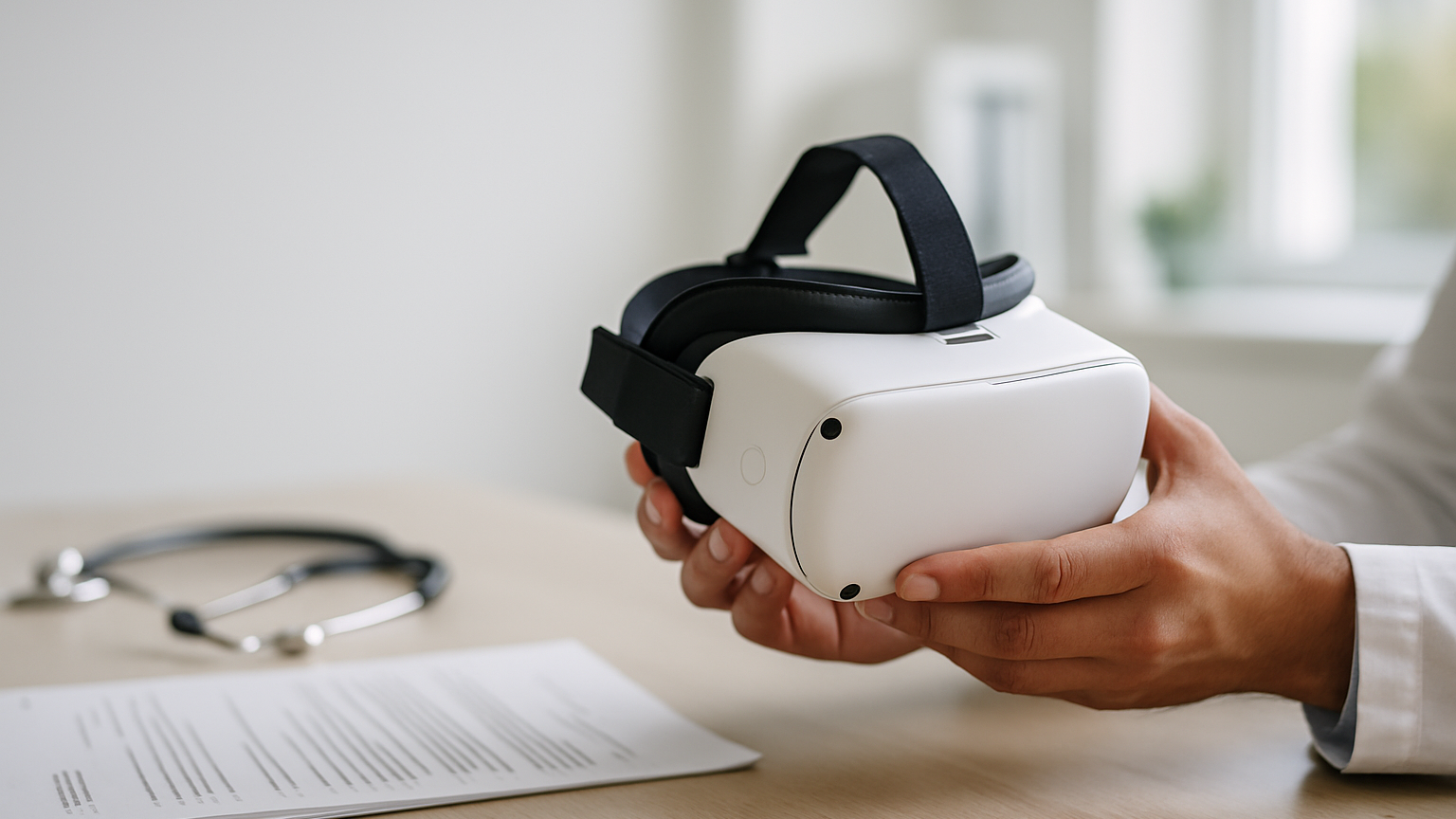
There’s a moment every clinical education leader knows well: the CFO asks, does this training actually change behavior and outcomes? With immersive learning, you can finally answer with data, not just anecdotes. A VR clinical communication simulation puts clinicians into high-stakes moments—consent discussions, de‑escalation, handoffs—so they can practice, make mistakes, and try again in a consequence-free environment. That repetition turns into consistent behaviors on the floor, which is where ROI is either made or lost. Instead of fly-in workshops that fade in a week, you get deliberate practice baked into the workweek. And yes, it’s designed to scale without hijacking operations.
What makes this different from role‑play? The stakes feel real, the scenarios branch based on your choices, and everyone trains against the same, validated rubric. That means you can measure time to competence, variance between units, and the specific skills that need reinforcement. In practice, most teams notice that coaching conversations get shorter and more focused because everyone speaks the same language about behaviors. Let’s be blunt: if you only need a slide deck refresh, VR is overkill. But if you need consistent, safe communication under pressure—across shifts and sites—immersive training earns its keep. And when you’re ready to see the bigger picture of what’s possible, explore our XR & AI MedTech solutions.
RTE Lab builds the bridge from innovation to operations. We combine XR training simulations with AI‑supported tools and a human‑centered R&D approach, so your program moves from pilot to policy instead of getting stuck as a cool demo. That includes interactive prototypes to align stakeholders, proof‑of‑concept solutions tested with real clinicians, and pragmatic UX for VR/AR so the headset never gets in the way of the skill. The outcome you care about—fewer critical incidents tied to communication, stronger patient experience, smoother interprofessional collaboration—stays front and center. The method just becomes the most efficient way to get there. That’s the point.
Why Now: The Business Case For Immersive Communication Training
Soft skills don’t feel soft when they impact readmissions, grievances, and clinician burnout. Communication shows up in incident reviews, patient surveys, and team escalations more often than we like to admit. Traditional training methods help with knowledge, but behavior under pressure is a different beast. Immersive practice closes that gap by recreating the context—noise, emotion, uncertainty—so the right behaviors become automatic. The business case starts there: fewer preventable escalations, smoother handoffs, and a more confident workforce.
Then comes scale and consistency. With simulation, every learner experiences the same calibrated scenarios and feedback, whether they’re on nights or rotating between sites. You reduce reliance on standardized patients and travel-heavy workshops, cutting backfill and logistics while keeping quality high. Scheduling shifts from big‑bang events to short, repeatable sessions that fit around care delivery. And because you control the scenario library, you can align training with policy updates and safety priorities without reinventing the wheel each quarter.
Measurement seals the deal. When practice is structured against a shared rubric, you can track competencies by unit, role, and scenario, then target reinforcement where it matters. That lets leaders move from “we trained them” to “we can show skill adoption and retention.” In sales terms, this is the moment your internal champion stops pushing and starts pulling others in—because they can show progress, not slides. If you’re aligning budgets with quality metrics this year, immersive communication training maps cleanly to those goals.
When VR clinical communication simulation Moves The Needle Most
Some conversations define care: breaking bad news, informed consent, behavioral health de‑escalation, complex discharge planning, cross‑cultural encounters, and interprofessional handoffs. These are high‑variability, high‑stakes moments where scripts fall short and judgment matters. A VR clinical communication simulation shines here because it allows safe repetition of edge cases that staff rarely get to practice on the job. You can gradually increase complexity, surface biases, and build muscle memory around asking the next best question. The result is fewer surprises at the bedside and more reliable teamwork under pressure.
It’s especially effective for early‑career clinicians, role transitions, and teams spread across multiple locations. Instead of cramming everything into week‑one orientation, you can space practice and reinforce over time. Supervisors get a consistent lens for coaching, and staff see exactly how their choices change the patient or colleague response. In practice that looks like short, focused sessions that don’t blow up the roster but still deliver meaningful reps. Learners leave with concrete language they can use on the next shift, not just a checklist.
Who is this not for? If your challenge is pure policy awareness or annual compliance tick‑boxes, cheaper formats work fine. If your environment cannot support even a small pool of shared headsets, shelf‑stable e‑learning will be easier. And if your current gap is technical equipment handling rather than conversation under pressure, you’ll get more value starting with task training. Let’s be honest: mismatch the tool to the problem and ROI evaporates. Pick scenarios where behaviors truly move outcomes, and the investment pays for itself in avoided friction.
What You Get With RTE Lab: End-to-end XR And AI For Soft-skills
RTE Lab delivers more than a headset demo. We combine XR TRAINING SIMULATIONS with AI PATIENT ENGAGEMENT TOOLS and AI THERAPEUTIC APPLICATIONS to build programs that actually live in your workflows. Our CUSTOM XR & AI SOLUTIONS let you tailor content to specialties and policies, while UX FOR VR / AR keeps the experience intuitive for first‑time users. Clinical communication simulations sit alongside medical and soft‑skills training and even rehabilitation scenarios where appropriate. That breadth means one partner can support multiple training priorities without fragmenting your stack.
We start with interactive prototypes to align on learning goals and the behaviors that matter, then iterate quickly toward proof‑of‑concept solutions. Scenarios are designed to reflect real clinical dynamics, with clear cues for observation and coaching. Because the same scenarios run across sites, leaders can focus on consistency rather than reinventing content from scratch. Your educators keep control of what’s assessed and how mastery is defined, so VR augments your pedagogy rather than dictating it. That’s how adoption sticks.
If you want a deeper look at how ideas move from whiteboard to ward, here’s our research and development process. And if you’re mapping learning across the continuum—from onboarding to advanced practice—our portfolio of our XR & AI MedTech solutions gives you room to grow without swapping vendors every quarter. The common thread is human‑centered design in partnership with clinical teams, so content feels familiar, not fictional. That’s the difference between a shiny pilot and a lasting program. We aim for the latter.
Implementation Without Disruption: Pilot, Proof-of-concept, Scale
Rolling out immersive training doesn’t need to hijack schedules. We anchor pilots around small cohorts, clear rubrics, and existing coaching rhythms, so the lift is minimal and the signal is strong. IT engagement focuses on device management and basic security checkpoints; education leads stay in the driver’s seat on learning design. Infection control and device hygiene protocols are set up front to prevent surprises. By the time you scale, your playbook is tested and boring—in the best possible way.
Change management works when wins are visible and repeatable. That’s why we prioritize early use cases where communication behaviors have clear downstream effects—like de‑escalation or consent conversations—so frontline staff feel the benefit quickly. Leaders see fewer ad‑hoc escalations; educators see richer debriefs; staff see confidence rising after a handful of reps. Small, frequent sessions beat rare, all‑day events for both learning and logistics. Consistency, not heroics, is what scales.
As you expand, content governance matters. We help you structure a scenario library with version control, a review cadence with subject‑matter experts, and alignment to your policies. That keeps training current without churn. Most importantly, the focus stays on behaviors your quality and safety leaders care about, not generic conversation tips. When training, operations, and quality share the same targets, ROI becomes a shared scoreboard.
From Interactive Prototype To Proof-of-concept In 4-6 Weeks
A typical path moves fast: align on behaviors, build an interactive prototype, test with a small group, then refine into a proof‑of‑concept that leadership can evaluate. Many teams reach that proof‑of‑concept stage in 4–6 weeks, depending on scope and stakeholder availability. The goal isn’t to be perfect—it’s to validate that the right behaviors are trained, the workflow fits, and the experience is comfortable for first‑time users. Once those boxes are ticked, expanding scenarios and cohorts becomes straightforward. You’re investing in momentum, not just a module.
If you want to see how this looks behind the scenes, take a look at our research and development process. It’s built for multidisciplinary teams and supports grant‑funded projects when that’s the right path. The emphasis is on co‑design with clinicians and rapid iteration with real feedback, so decisions are made on evidence, not hunches. That’s how you de‑risk innovation without slowing it to a crawl.
UX For VR/AR And Smooth LMS Or EHR Integrations
Good VR feels invisible: easy onboarding, clear prompts, and no surprise gestures. Our UX FOR VR / AR practice focuses on first‑session comfort and repeat usability, so learners spend their energy on behaviors, not buttons. On the systems side, lightweight connections to your LMS help with rostering and completion records, while careful scoping keeps EHR touchpoints simple and secure where they’re needed. The principle is pragmatic: integrate where it reduces admin noise, avoid coupling that makes updates hard. Your educators should be able to run sessions without a support ticket.
Because the same scenarios often support multiple roles, we design navigation and feedback to adapt without fragmenting content. That keeps maintenance sane as you scale across departments. Accessibility and comfort settings are baked in from the start, which also improves psychological safety during challenging scenarios. When the experience is smooth, resistance drops and practice time climbs—both are essential for behavior change.
Funding Options: Grant-supported R&D And Scalable Procurement
There’s more than one way to fund innovation. Some organizations start with operating budgets for pilot cohorts, then expand through education or quality funds once outcomes are clear. Others pursue grants for research and development—our R&D process supports grant‑funded projects and multidisciplinary teams. Procurement can then shift to scalable models as you standardize content and expand device pools. The throughline: keep scope tight early, prove value, and unlock larger budgets with evidence.
We’ll help you map stakeholders, align timelines with your budget cycle, and choose a rollout that fits your governance. That includes planning device strategy, training the trainers, and documenting outcomes your sponsors care about. When finance sees a clear path from pilot to scale—tied to safety and experience metrics—they say yes more often. That’s good for patients, staff, and the bottom line.
Evidence And Safety: Human-centered R&D With Clinical Partners
Communication is personal, so the research and design process must be, too. We work with clinical partners to co‑design scenarios, language, and decision points that reflect the realities of your setting. Iterative testing ensures the experience is challenging but psychologically safe, with debrief prompts that help surface reasoning rather than just right‑or‑wrong labels. The aim is to build judgment, empathy, and structure all at once. That’s hard to do in a classroom and exactly what simulation is for.
Safety also means respecting time and attention. Sessions are scoped to fit around shifts, with clear entry and exit points, and optional refreshers to sustain gains. Educators get materials to support consistent facilitation, so one good session doesn’t depend on a single great instructor. Over time, a shared rubric gives teams a common language for coaching in and out of VR. That continuity is what turns one‑off training into a culture of practice.
On the data side, privacy‑by‑design guides how information is handled. We focus on learning signals, not PHI, and align integrations to the minimum needed for scheduling and completion tracking. Governance and review cycles keep scenarios current with policy and equity standards. When your clinicians see that care for learners mirrors care for patients, adoption rises naturally. Trust is a feature, not a nice‑to‑have.
Pricing, ROI And Procurement Essentials For Healthcare Teams
What drives cost? Scope of content (how many scenarios and roles), depth of customization, device strategy, and the level of integration with your systems. Support and educator enablement matter too—programs succeed when internal teams can run and adapt them without constant vendor lift. Because needs vary, pricing follows the shape of your program rather than forcing you into a one‑size bucket. The good news is you can start focused, prove value, and expand deliberately. That’s a healthier budget story than a massive bet on day one.
For ROI, build a simple model everyone can see. Capture baseline metrics tied to communication—escalations, patient experience in target domains, time to independent practice—and set realistic improvement ranges. Track training hours replaced or reduced, travel avoided, backfill saved, and standardized patient costs you no longer need. Then add qualitative signals leaders care about: coaching quality, confidence, and consistency across sites. When finance sees both the avoided costs and the performance lift, approval follows.
Procurement is smoother when the path is clear: a pilot to validate fit, a proof‑of‑concept to demonstrate outcomes, then a scale plan with governance and content management. If a grant is a good fit for your goals, our team can align work to those requirements as part of our research and development process. And when you’re ready to explore the broader portfolio—from clinical communication simulations to therapy‑adjacent tools—start here: our XR & AI MedTech solutions. Choose the scenarios where behavior change matters most, and the business case writes itself.